Design systems, not diagrams
Simulark
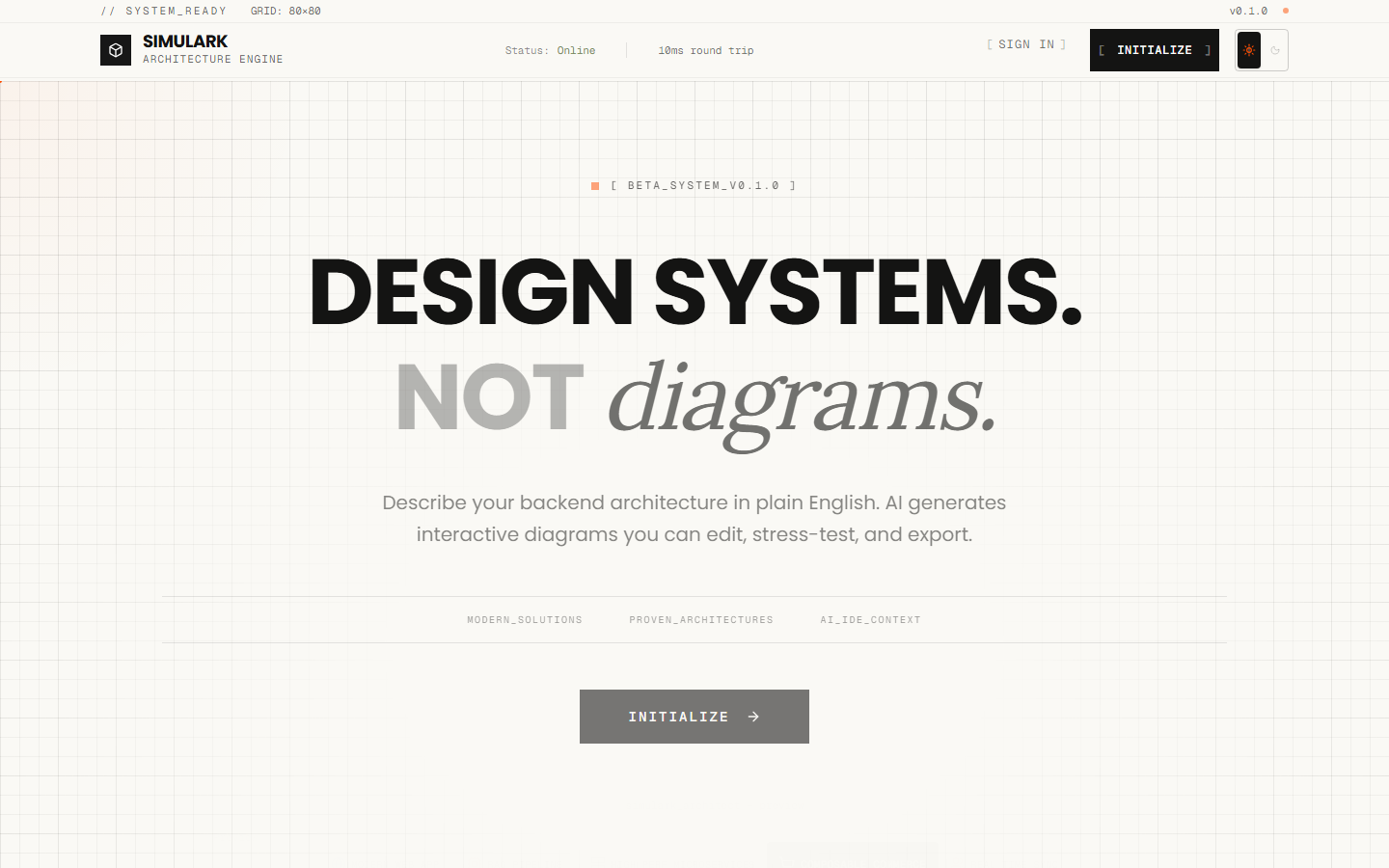
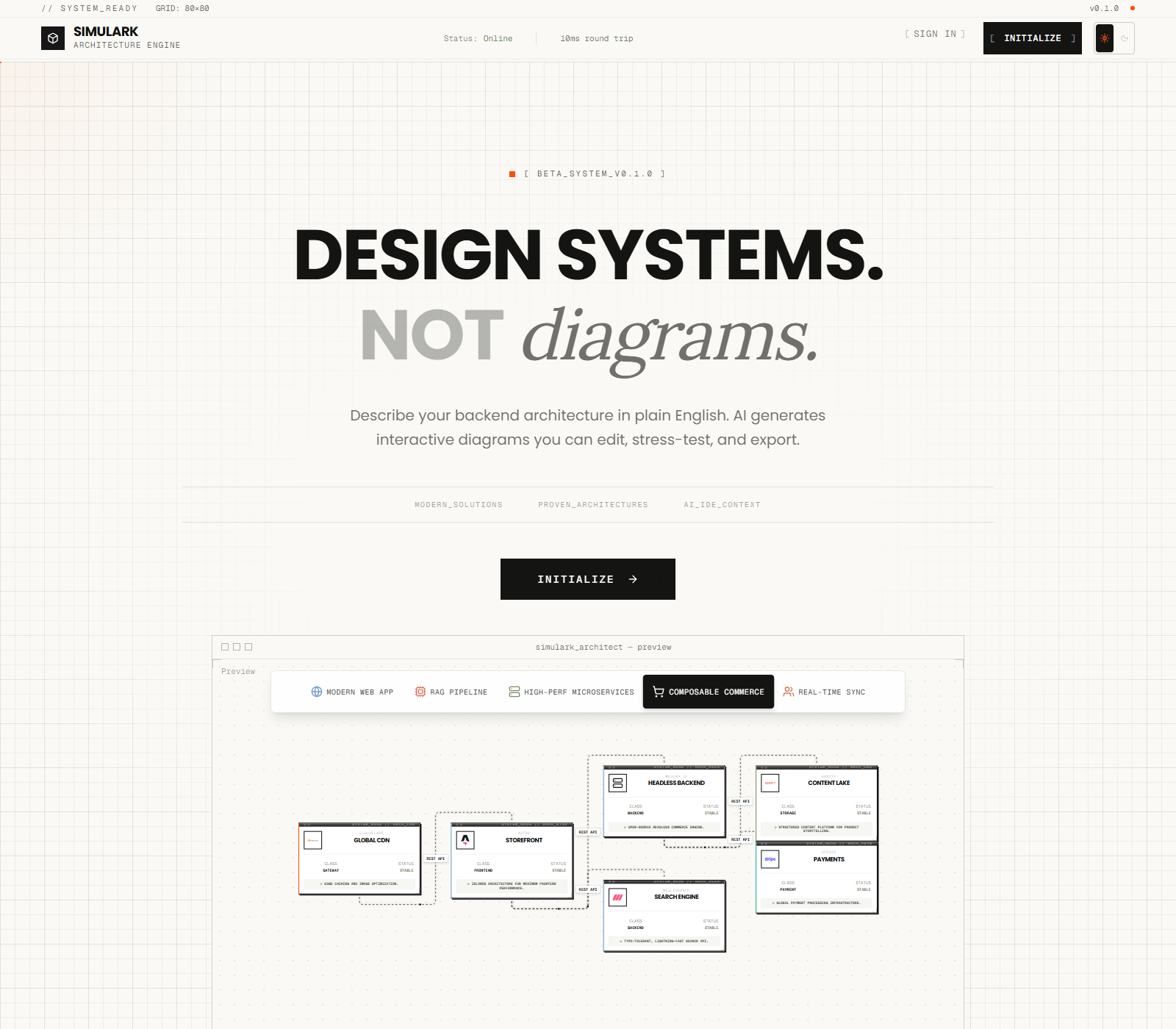
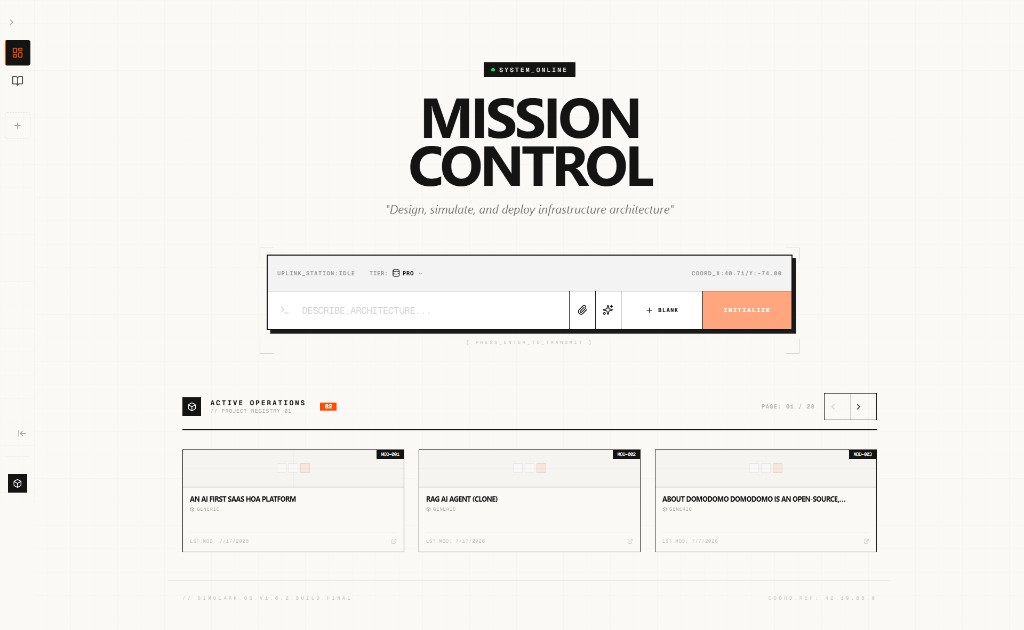
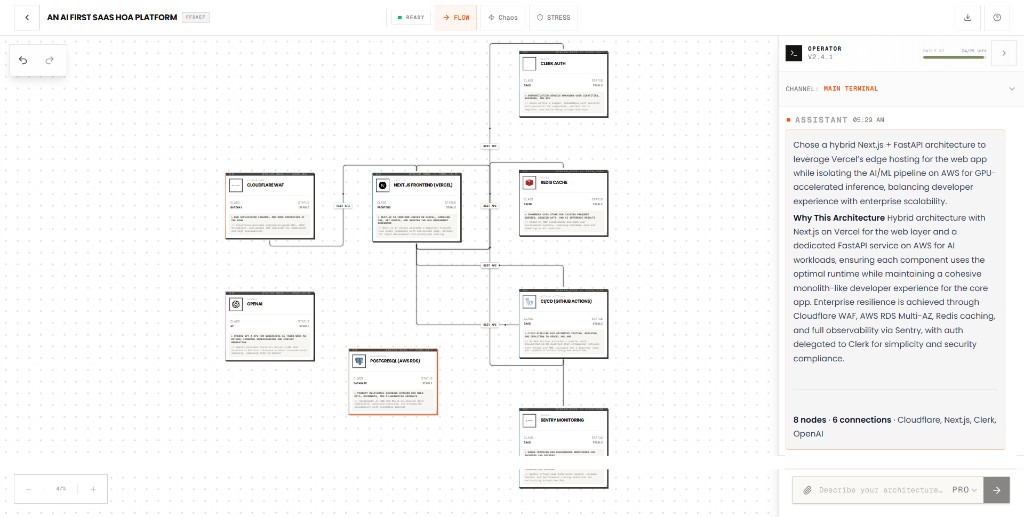
Plain English in, live architecture out: editable canvas, validation, and an operator that keeps iterating with you.
Problem
Teams describe backends in prose, then redraw diagrams by hand. Structure gets lost between chat, docs, and engineering handoff.
Architecture
Product flow
System architecture
Generation → canvas loop
My responsibility
I owned the generation-to-canvas loop: streaming inference, schema-shaped outputs, validation, deterministic autoFix, and how edits land on the graph without rewriting everything.
Decision
Prefer structured JSON plus deterministic validators and rule-based autoFix over free-form chat edits. Use an agent tool path for surgical edits on existing graphs. Stream incremental canvas updates, and fall back from DeepSeek to Qwen on DashScope when a model stalls.
What could fail
Hallucinated topologies, invalid edges, broken incremental edits, rate limits, and mid-stream provider outages that leave the canvas half-updated.
How I made it reliable
Schema validation and tech normalizers catch bad graphs early. Rule autoFix repairs common shape issues before the canvas mutates. Incremental streaming and agent edits limit blast radius. Upstash Redis handles cache and burst rate limits. Supabase backs auth, projects, and daily usage quotas.
Result
Plain English in. Live architecture out: editable canvas, stress modes, and an operator that keeps iterating with you.